These are some of the most common questions we get asked daily, so we thought it makes sense to give you a full guide to extinguishers and the legislation regarding extinguishers in the UK completely free of charge, to help you understand what you require in your premises, what your legal obligations are, help you carry out a Fire Risk Assessment or just be more informed so when that annual fire extinguisher engineers report lands in your inbox you actually know what you’re paying for.
Simply your extinguishers require inspections at 3 main intervals.
1. Monthly routine check.
2. Yearly certified inspection and service.
3. A five Yearly extended service except for Co2 extinguishers which is a 10-year extended service.
Think of your fire extinguishers as good friends. Like any good friend, they need a bit of attention to stay in top shape. This simply means a quick, friendly visual check every month to make sure everything's alright. No matter if it's a Co2, foam, wet chemical, or powder extinguisher, they all need this monthly date.
This little catch-up won't take too much of your time. Just have someone responsible take a peek at the top cap pin, pressure gauge, and seal to make sure no one has fiddled with them. Also, let's not forget to check that it's still snugly attached to the wall bracket and the instructions are clearly readable, in case someone needs to use it in a hurry.
Once a year, your extinguisher pals need a bit of a spa day, what we call a basic service. This is required by the BS 5036 regulation and you, as building managers or owners, need to schedule this pampering session. This is handled by a professionally certified fire technician as a faulty fire extinguisher is not something to joke about.
During this annual check-up, our expert will give your extinguisher a thorough once-over, replacing parts as needed. Even as your extinguishers age, this service ensures they'll still be ready to leap into action if needed.
Every five years, your extinguisher deserves an extended vacation, or what we call an extended service. This is a deeper, more thorough service, again performed by our certified technicians. All types of extinguishers get this treatment, except for Co2.
During this service, the technician will do everything included in the basic service, and then some. They'll discharge the extinguisher, checking how far and in what pattern the fire-stopping material sprays out. This ensures that your extinguisher will work effectively and efficiently, should it ever be called into action. So, with these regular checks, you can rest easy knowing your extinguishers are ready to protect you.
What are the different types of Fire Extinguisher?
Fire extinguishers come in five main categories: wet chemical, CO2, dry powder, foam, and water. To be compliant with regulations, it's crucial to have the right type of fire extinguisher for your specific setting. The type required depends on the potential fire hazards present, which can vary based on the type of fuel that could ignite.
Ensure that your fire extinguisher is the appropriate size and weight for your premises to satisfy fire safety regulations.
While there are five primary categories, dry powder and water extinguishers have different versions, bringing the total to eight distinct types. These include specialist dry powder, standard dry powder, foam, water spray, water mist, water spray, wet chemical, and carbon dioxide. Please note, no single fire extinguisher is suitable for all fire classes.
Below, we provide an overview of the different fire classes and the appropriate extinguisher for each. We also offer a detailed explanation of the various types of fire extinguishers.
Fire Classes: There are six different fire classes:
Class A – Fires involving combustible materials like paper, fabric, wood, and other flammable solids. Class B – Fires involving flammable liquids such as paint, turpentine, or petrol. Class C – Fires involving flammable gases including methane, butane, or hydrogen. Class D – Fires involving combustible metals like potassium, aluminium, or magnesium. Class F – Fires involving cooking oils, like a chip-pan fire. Electrical Fires – These are fires involving electrical equipment. Once the electrical item is removed, the fire class changes.
Types of Fire Extinguishers:
Foam Extinguishers: Commonly used for class B fires, these water-based extinguishers can also be used for class A fires. They work by cooling the fuel causing the fire and creating a barrier between the fuel and flame. They should be located by the exits on floors identified as class A or B fire risks.
Water Extinguishers: Primarily used for class A fires, they work by cooling the burning fuel, slowing the rate of combustion until the fire is out. Like foam extinguishers, they should be located by the exits on floors identified as class A fire risks.
Water Spray Extinguishers: Equipped with a spray nozzle, these extinguishers can cover a larger surface area more quickly to extinguish fires.
Water Mist Extinguishers: These extinguishers release microscopic water particles that suffocate the fire and create a heat-reducing mist.
Dry Powder Extinguishers: These extinguishers can be used for class A, B, and C fires but should not be used in enclosed spaces due to the inhalation risk of the powder. They can also be used for fires involving electrical equipment up to 1000 V. Special dry powder extinguishers are used for fires caused by flammable metals.
Wet Chemical Extinguishers: These extinguishers are designed for use on Class F fires, involving cooking oils and fats. They can also be used on Class A fires.
Carbon Dioxide (CO2) Extinguishers: Mainly used for electrical fire risks and Class B fires, CO2 extinguishers displace the oxygen the fire needs to burn. They should be placed near the fire risk source or near the fire exits.
How do I use a fire extinguisher?
Fire extinguishers are vital tools in an emergency, and while no formal training is required to use them in an emergency, understanding their operation is important. Using the correct type of fire extinguisher for the fire at hand is crucial, as using the wrong type can have serious consequences. In any fire situation, the first step should always be to call your local emergency services, such as 999 or 112 in the UK.
Here's how to use different types of fire extinguishers:
Water Fire Extinguisher (Class A fires): Ensure the fire doesn't involve electricity or is near live electrical equipment. Stand at least 3 metres away from the fire, break the tamperproof seal and pull the pin. Hold the extinguisher upright, aim it away from the fire, and test it with a short burst. Then, aim the nozzle at the base of the fire and discharge fully while sweeping the nozzle side to side.
Foam Fire Extinguisher (Class A and B fires): The process is similar to using a water fire extinguisher. For liquid fires, aim at the side of the fire and allow the foam to spread across the fire. For uncontained liquid fires, aim the hose over the fire and let the foam drop onto the fire, sweeping the nozzle along the fire. For non-liquid fires, aim at the base and sweep the nozzle across the fire.
CO2 Fire Extinguisher (Class B and electrical fires): Remember not to hold the extinguisher horn as it can cause freeze burn. Stand 1-3 metres away from the fire, break the tamperproof seal and pull the pin. Raise the horn at a 90-degree angle to the extinguisher cylinder, hold the lever with both hands, and test it with a short burst. For Class B fires, aim the horn at the base of the fire and sweep side to side. For electrical fires, aim at the fire and, if possible, turn off the electrics.
Wet Chemical Fire Extinguisher (Classes A, B and F fires): Similar process to the foam extinguisher. However, when you squeeze the lever, aim the hose at the side of the fire, allowing the potassium salts to create a soapy film on the burning oil or fat.
Dry Powder Fire Extinguisher (Classes A, B, C and electrical fires): Stand 5-7 metres away from the fire, break the tamperproof seal and pull the pin. Test the extinguisher with a short burst, then aim the hose at the base of the fire, gently squeeze the lever, and sweep the nozzle from back to front over the fire. For uncontained liquid fires, aim the hose over the fire and sweep the nozzle along the fire.
Remember, never use an extinguisher on escaping gases, only attempt to fight a fire in its earliest stages, maintain a safe distance, and never use more than one extinguisher to fight a fire.
Navigating UK Fire Extinguisher Legislation: A Simple Guide for Business Owners
Safety is paramount in any workplace, and in the UK, it is enshrined in law. Among these regulations, fire safety is a critical aspect, and it includes the requirement for appropriate fire extinguishing equipment. Herein, we explore the UK Fire Extinguisher legislation and provide a simple walkthrough for business owners on their obligations concerning fire extinguishers in their premises.
The main piece of legislation that governs fire safety in non-domestic premises in the UK is the Regulatory Reform (Fire Safety) Order 2005, often abbreviated to RRO or FSO. This law replaced over 70 pieces of fire safety law and seeks to simplify matters by placing the responsibility for fire safety squarely on the shoulders of the person in control of the premises, known as the 'Responsible Person'.
The RRO stipulates that the Responsible Person must carry out a fire risk assessment, implement and maintain a fire management plan, and ensure that the necessary fire precautions are in place. These precautions include suitable fire detection systems and fire-fighting equipment, which includes fire extinguishers.
The British Standards Institution (BSI) also provides guidance in the form of BS 5306, which concerns the selection and positioning of portable fire extinguishers.
Understanding the ‘Responsible Person’
In the context of the RRO, the Responsible Person is typically the employer in a workplace. However, it could also be the owner, landlord, an occupier, or anyone else with control of the premises, such as a facilities manager, building manager, managing agent, or risk assessor.
The Responsible Person must ensure that a suitable and sufficient fire risk assessment is carried out on the premises. If the premises are complex or large, this should be done by a competent person, such as a professional risk assessor.
Fire Extinguishers and Your Business
The RRO does not explicitly specify the number and type of fire extinguishers a business should have. However, it does require appropriate fire-fighting equipment for the specific risks in the premises. Guidance from the BSI recommends a minimum of two 'Class A' extinguishers on each storey of the premises. Class A extinguishers are for fires involving solid materials such as wood, paper, and fabric.
Moreover, if your risk assessment identifies other types of fire risks, you may need different types of extinguishers. For example, a 'Class B' extinguisher for flammable liquids, a 'Class C' extinguisher for gases, 'Class D' for metal fires, an 'Electrical' extinguisher for electrical equipment, and a 'Class F' extinguisher for cooking oils and fats.
Placement and Maintenance
Extinguishers should be conveniently located and readily accessible, ideally along escape routes and near room exits. They should also be properly signed so that people can easily identify their location.
Regular maintenance of fire extinguishers is crucial to ensure they function correctly when needed. Under the RRO, fire extinguishers should be subject to an annual 'extended service' by a competent person. Every five years, water, foam, and powder extinguishers require a 'discharge test', while CO2 extinguishers need a 'hydrostatic pressure test'.
The RRO requires that staff are provided with adequate fire safety training. This should include training on how to use fire extinguishers properly. Remember, incorrect use of an extinguisher can be dangerous and may worsen the situation.
Conclusion
Compliance with UK Fire Extinguisher Legislation is not just a legal obligation but a commitment to the safety of your employees, customers, and business. By understanding and implementing these you clearly demonstrating that you are being responsible and safeguarding your business.
Understanding Fire Safety: Passive Fire Protection and Fire Door Regulations in the UK
Fire safety is a critical concern in any building, whether residential, commercial or industrial. In the UK, fire safety regulations are comprehensive and robust, but they can also be a bit complicated to understand. This article aims to simplify and demystify two essential aspects of fire safety: Passive Fire Protection and Fire Door regulations. We'll also delve into the obligations people have and the importance of regular inspections and surveys.
Passive Fire Protection (PFP) is an integral part of structural fire protection and fire safety in a building. It's called 'passive' because it's built into the structure of the building and works without human intervention or mechanical activation. It's essentially about making sure that if a fire does break out, it spreads as slowly as possible, allowing more time for people to escape and for fire services to arrive.
Passive Fire Protection includes:
Fire-resistant walls, floors, and doors to prevent the spread of fire
Fire and smoke dampers in air conditioning systems to control the spread of smoke and flames
Firestopping materials to seal any openings and prevent fire spread through small gaps
What are the Regulations for Passive Fire Protection in the UK?
The principal regulation governing passive fire protection in the UK is the Regulatory Reform (Fire Safety) Order 2005, also known as the RRO or FSO. This legislation places responsibility on the 'responsible person' – usually the owner or the person in control of the premises – to ensure adequate fire safety measures, including passive fire protection, are in place.
If you're the responsible person, you're obliged to:
Conduct a fire risk assessment regularly and implement appropriate fire safety measures based on the findings.
Maintain all fire safety measures, including passive fire protection, in efficient working order.
Regularly review and update the fire risk assessment, especially if significant changes are made to the premises.
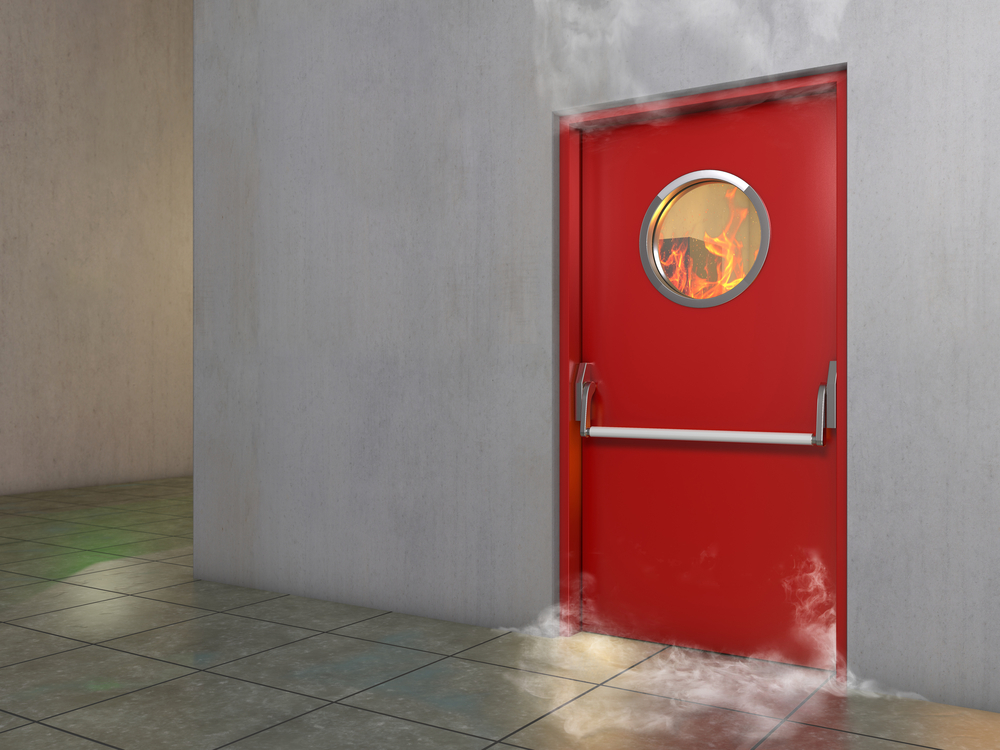
Fire doors are a key component of passive fire protection, acting as a barrier to prevent the spread of fire and smoke while providing a safe escape route. They're specially designed to resist fire for a certain period, typically 30 or 60 minutes.
What are the Fire Door Regulations in the UK?
Under the Regulatory Reform (Fire Safety) Order 2005, fire doors must be correctly installed and maintained. They must be kept shut or be fitted with an approved device that will automatically close the door in the event of a fire.
As the responsible person, you're required to:
Ensure fire doors are correctly installed and maintained
Ensure fire doors are kept shut or automatically close if a fire breaks out
Regularly inspect fire doors to ensure they're functioning correctly
The Need for Regular Fire Door Inspections and Passive Fire Surveys
Regular inspections of fire doors and passive fire surveys are crucial to ensure that these safety measures are effective and in line with regulations. A fire door inspection should look at all parts of the door, including the seals, hinges, door closer, and any automatic release mechanisms.
A passive fire survey, on the other hand, involves a comprehensive review of all the building's passive fire protection measures to ensure they're up to standard. This can include checking fire-resistant walls and floors, fire and smoke dampers, and firestopping materials.
Regular inspections and surveys are more than just a regulatory requirement – they're essential to the safety of the occupants of a building. They help identify any issues or deficiencies in fire protection measures, allowing for necessary repairs or upgrades to be made.
In conclusion, both Passive Fire Protection and Fire Door regulations play a pivotal role
Fire safety is an essential aspect of any well-functioning workplace. However, its significance transcends the practical measures of preventing and mitigating fire-related incidents. In fact, fire safety serves as a critical element in fostering a healthy business culture. By prioritising fire safety within an organisation, businesses can enhance communication, collaboration, and employee engagement, all while safeguarding their assets and employees. This article delves into the various ways that fire safety contributes to an improved business culture.
Promoting a Culture of Responsibility
Fire safety initiatives require employees at all levels to take responsibility for their actions and their work environment. When employees understand the importance of fire safety, they become more aware of potential hazards and are more likely to report unsafe conditions. This heightened sense of responsibility not only helps to prevent fires but also fosters a culture of accountability and engagement within the organisation.
Encouraging Teamwork and Collaboration
Effective fire safety measures rely on the collective effort of employees, who must work together to identify, report, and address potential hazards. Regular fire drills, training sessions, and safety briefings encourage communication and collaboration among employees. This increased interaction creates a more unified workforce, as individuals from different departments and roles come together to ensure the safety of the entire organisation.
Enhancing Employee Morale and Trust
When a company prioritises fire safety, it sends a clear message to its employees that their well-being is valued. This can lead to increased employee morale and trust in the organisation. Employees who feel cared for and protected are more likely to be engaged and loyal, thus contributing to the overall success of the business. Additionally, a safe working environment is often correlated with higher levels of job satisfaction, which can further improve employee retention.
Boosting the Company's Reputation
A strong commitment to fire safety can enhance a company's reputation among clients, partners, and the general public. By proactively addressing fire safety concerns and promoting a culture of responsibility, businesses can demonstrate their dedication to employee welfare and ethical business practices. This positive image can lead to increased trust and confidence in the company, potentially attracting new clients and fostering long-term partnerships.
Supporting Continual Improvement
Fire safety is not a one-time initiative but an ongoing process that requires regular review and improvement. By continuously assessing and updating fire safety policies and procedures, businesses can identify areas of weakness and implement necessary changes. This commitment to improvement can be applied to other aspects of the organisation, fostering a culture of learning and growth.
Conclusion:
Fire safety is an integral component of a thriving business culture. By prioritising fire safety, organisations can enhance employee engagement, collaboration, and morale while maintaining a safe working environment. Additionally, a strong commitment to fire safety can boost a company's reputation and support a culture of continual improvement. In short, fire safety is not only essential for protecting the physical assets and lives of employees but also for cultivating a positive and productive business culture.







 AMP Fire
